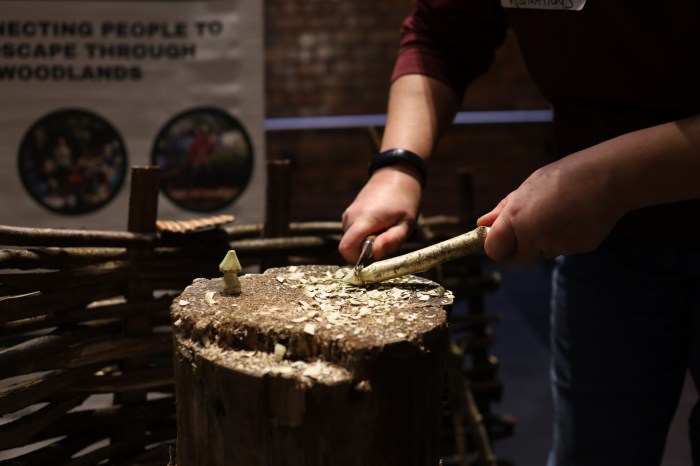
Intangible Cultural Heritage
Traditions or living expressions inherited from our ancestors and passed on to our descendants, such as oral traditions, performing arts, social practices, rituals, festive events, knowledge and practices concerning nature and the universe or the knowledge and skills to produce traditional crafts.
La Paz, April 24, 1973
The Ministry of Foreign Affairs and Religion of the Republic of Bolivia writes a letter to the UNESCO’s director-general, lamenting commercialisation and export of traditional Bolivian cultural practices such as music and dancing, and the lack of instruments for international protection of these practices.
For the first time, the cultural heritage discussed and protected by UNESCO is described as tangible.
USA, 1970
Simon and Garfunkel release El Cóndor Pasa (If I Could).
The song was using a traditional Andean melody, El condor pasa, and English lyrics were written by Simon, who had first heard the melody in Paris, played by Los Incas, a Paris-formed Andean folk music group.
The piece was a huge success, a best-selling single and worldwide hit. Hundreds of artists from all over the world recorded and sold their own version of the piece.
The Condor, for centuries a symbol of Andean pride, highly revered by the Inkas, was now being appropriated to once again enrich the pockets of anyone but the people who gave origin to this tradition.
The Bolivian Ministry of Foreign Affairs and Religion warns UNESCO about the risks of loss of traditional cultures, if their dances, music and intangible and practised aspects of their cultures were not protected.
His main point is that folklore needs to be defined by international law as “national property”.
1933
The Peruvian musician and composer Daniel Alomía Robles registers the song El Condor Pasa as his own composition at the US Library of Congress Copyright Office.
Turns out Alomía Robles was himself a “folklorist” and collector who had travelled throughout the Andes transcribing numerous traditional melodies.
This story is probably the most recounted myth of origin for the concept and regulation of Intangible Cultural Heritage, and raises the big question:
WHO OWNS INTANGIBLE CULTURAL HERITAGE?
When getting to this point where the storytelling is gone and reflection starts, one might wonder why we should even care?
Intangible Cultural Heritage Conference, Perth
14/11/2025
I attended the Intangible Cultural Heritage of Scotland Conference organised and funded by the ICH in Scotland Partnership (including Creative Scotland, Historic Environment Scotland, Museums Galleries Scotland (MGS), and Traditional Arts & Culture Scotland.
The keynote speech by the ethnologist, piper and broadcaster Gary West set the scene for making the best out of this event with our minds wide open to what is to be celebrated about Scotland’s ICH and what is missing, as well as how to look out for it.
What happens when a tradition stops being practised?
What happens when it changes in time, or, if after a rupture, it gets revived? Does it lose its “worth”?
As an anthropologist, I am very much aware that there is no such thing as a monolithic Culture with a capital “C”. Cultures are fluid, dynamic, co-constructed by their very practitioners.
The anthropologist Arjun Appadurai would stretch it even to the point that “culture” should be used in its adjectival form “cultural”, to highlight the fluid and mutating aspect of it. Giving to the concept of “Culture” an absolute descriptive and denotative power makes it work too similarly to the concept of “race”, he argues.
A beautiful image Gary West referred to in his speech:
Tradition can be thought to as a stream
flowing through time.
looking at a point on the stream it’s going to be different at every second,
but you will still recognize it as the same stream.
Tradition, folklore, ICH, Culture or cultural practices: can they be purely immaterial, intangible?
What can a traditional Scottish bagpiper do without a traditional Scottish bagpipe maker?
What can traditional folksongs tell you, without the very land they refer to?
the Tangible side of intangible heritage

During the ICH conference, I had the chance to join a guided tour of the newly opened Perth Museum. Mark Hall, one of the curators behind the project, led us through the building and its collections.
Mark repeatedly returned to the idea that no tradition, no matter how “intangible,” exists without some material form. Even the most sacred or ephemeral practice is tied to tools, spaces, songs, clothing, or instruments.
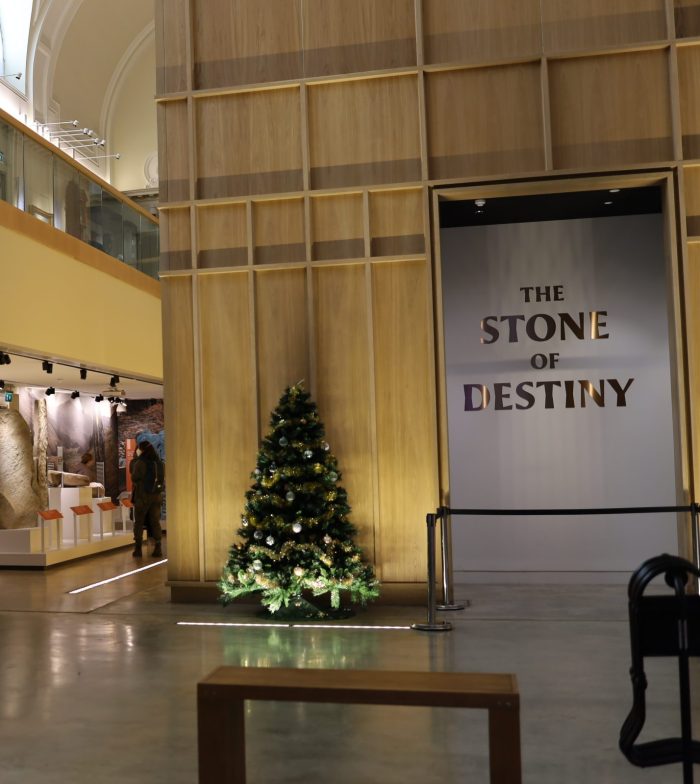
A great example is the very Stone of Destiny, which served as a ceremonial coronation seat for Scottish monarchs. At first glance, it is simply a block of rock. Hard, heavy, absolutely tangible. Yet it carries centuries of legends that continue to shift and reform in the present. Today, it is impossible to separate the rock itself from the meanings people project onto it.
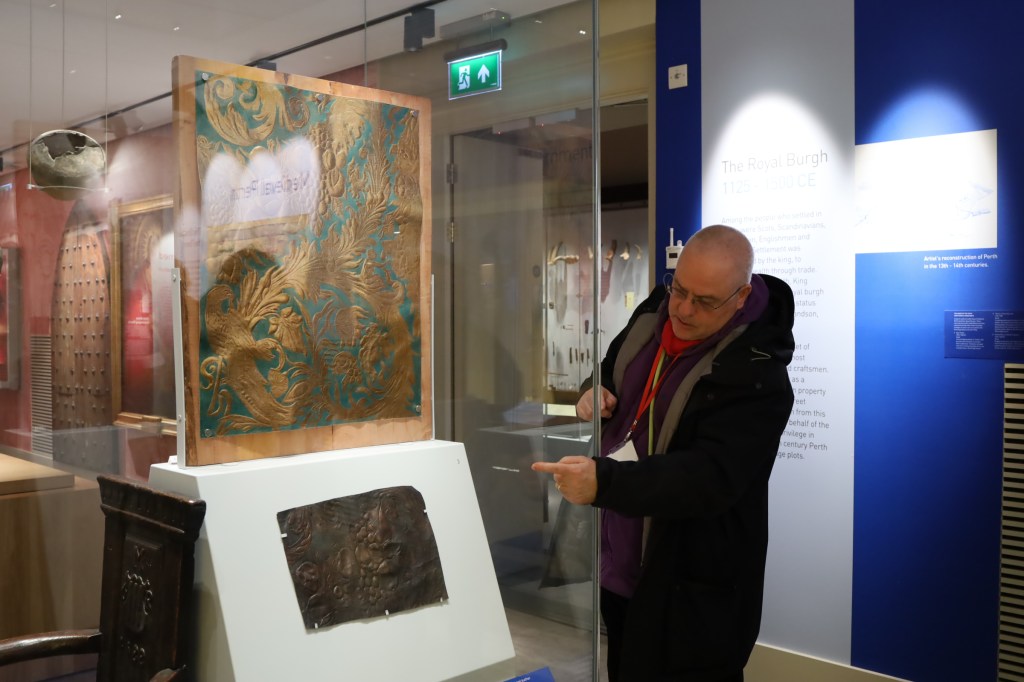
Other galleries showed this relationship even more clearly. A fragment of 16th-century gilded leather wallpaper, for example, reveals a whole world of craft knowledge. The museum invited a wood carver and a leather worker to reproduce the full design. Their collaboration brought the creative skills of the past into the present. The original fragment is tangible, but the knowledge needed to make it, revive it, and understand it belongs to the realm of intangible heritage.
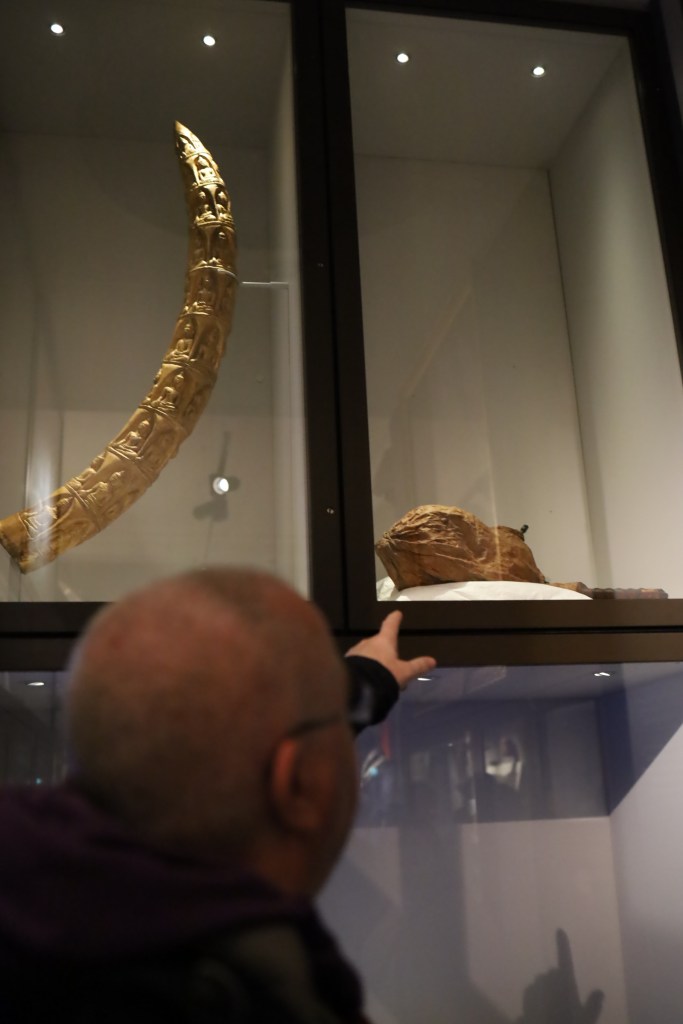
In the gallery dedicated to World Majority, the entanglement between the tangible and intangible becomes even more complex. Perth’s nineteenth-century collectors brought home objects from North America, the Pacific, South Asia, and other regions. Perth Museum does not want to centre the story of those collectors but the cultures from which these objects were taken.
One striking case features a set of Iranian bagpipes collected by a doctor from Perth who worked in Iran in the mid-nineteenth century. He left behind a detailed account of watching a maker at work. Despite this collector followed with a colonial argument describing why Scottish bagpipes were superior, the knowledge he accounted for regarding how to carve, assemble, and tune them can help support revival work among cultural groups seeking to reconnect with older musical traditions.
The museum collaborated with Indigenous filmmakers from the Pacific Northwest to present films on canoe building and other crafts. These films make it clear that museum collections can become reminders and teaching tools for communities whose practices were restricted or discouraged during colonial rule. Here, the value of objects lies not in their physical form alone but in the ability to spark conversations, rebuild knowledge, and strengthen identity.


Perhaps the most thought-provoking moment in the tour came in the small gallery devoted to objects from Aotearoa (New Zealand). Hall described how the museum has been working directly with Māori colleagues (both in New Zeland and UK), not only to reinterpret the pieces but also to rethink what it means for these objects to be here in the first place.
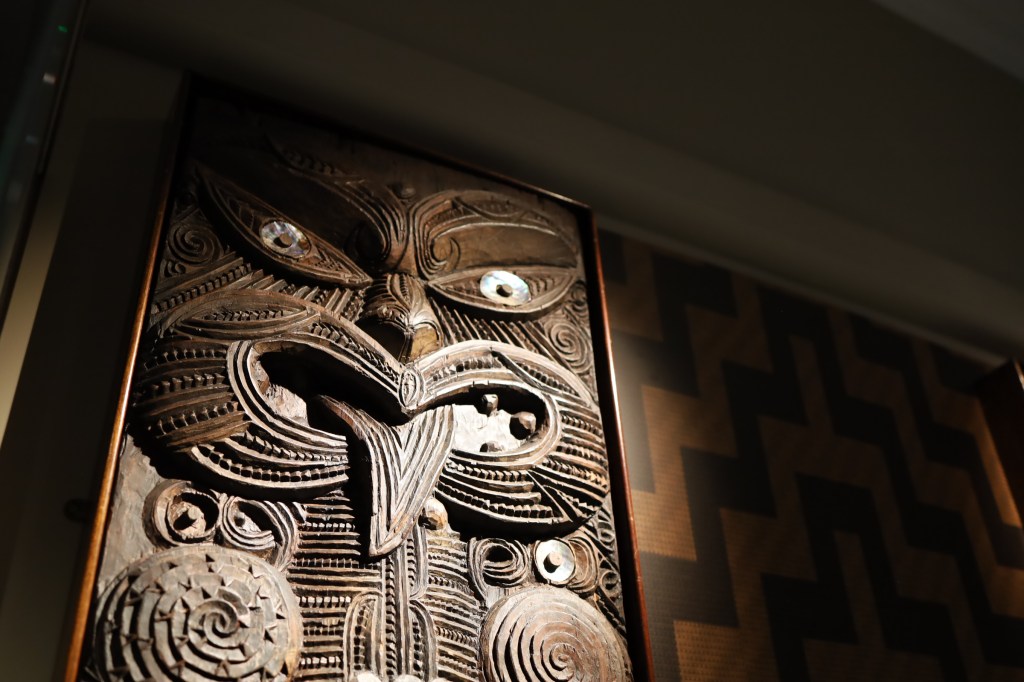
The “taonga” (Māori material culture) on display is undeniably physical, yet its life does not sit in the carved surface or woven fibres alone. Their meaning depends on the knowledge of how they were made, the genealogies they belong to, and the protocols that govern their handling. Hall explained that in some cases, Māori partners advised on the correct way to display an object or the kind of narrative that should accompany it. In others, the museum facilitated opportunities for community members to reconnect with objects held far from home, helping to revitalise techniques and cultural practices that had been fragmented by colonial history. Standing in front of these pieces, it was easy to see how a museum can become a place where material culture acts as a bridge, carrying knowledge, memory and practice across time and distance.
Sources:
Making Intangible Heritage: El Condor Pasa and Other Stories from UNESCO, chapter 2
The flight of the Condor, Film
Appadurai, Arjun. Modernity at large: Cultural dimensions of globalization. Vol. 1. U of Minnesota Press, 1996.
 Lucrezia Milillo