Lucrezia Milillo holds a PhD in Social Anthropology. Her doctoral research aimed to further our understanding of Andean khipus – colourful knotted cords used as writing in the Andes for fourteen centuries: before, during and after the Inka empire.
Using the practice theory framework to combine ethnographic fieldwork in Peru with the study of khipus in museum collections in Europe and the US, Lucrezia’s research provides new insights into the significance of colour and materials used in the production of Andean khipus.

Lucrezia in Tupicocha, November 2022 
Lucrezia with Yhlber Espiritu Vilcayauri, president 2022 of the “parcialidad” Centro Huangre, Tupicocha. Yhlber is wearing the “Kipukamayoc” of his “parcialidad”. 
Lucrezia studying plants that might have been used as for making khipu cords, 2022 
Lucrezia with two shicra bag weavers in Tupicocha, 2022 
Woman in Chinchero showing cochineal colour 
Elizabeth Auccapuma teaching Lucrezia basics of the art of dyeing. Chinchero, December 2022 
Elizabeth Auccapuma teaching Lucrezia basics of the art of dyeing. Chinchero, December 2022
In 2021-2024 Lucrezia is the Group Leader of a research project funded by IPERION-HS – a pan-European infrastructure for heritage science. The project is called “Meaningful materials in the khipu code: a multi-modal analysis” for which she coordinated the collaboration of six European museums and four European laboratories. In this way, she could lead the first physical and chemical analysis of eight khipus. The research team also included Dr Marei Hacke – a conservator scientist specialised in textile analysis with experience in the study of Andean textiles at the Heritage Laboratory of Visby, Sweden – and Professor Sabine Hyland – a worldwide leading khipu scholar in the Divinity department at the University of St Andrews-.
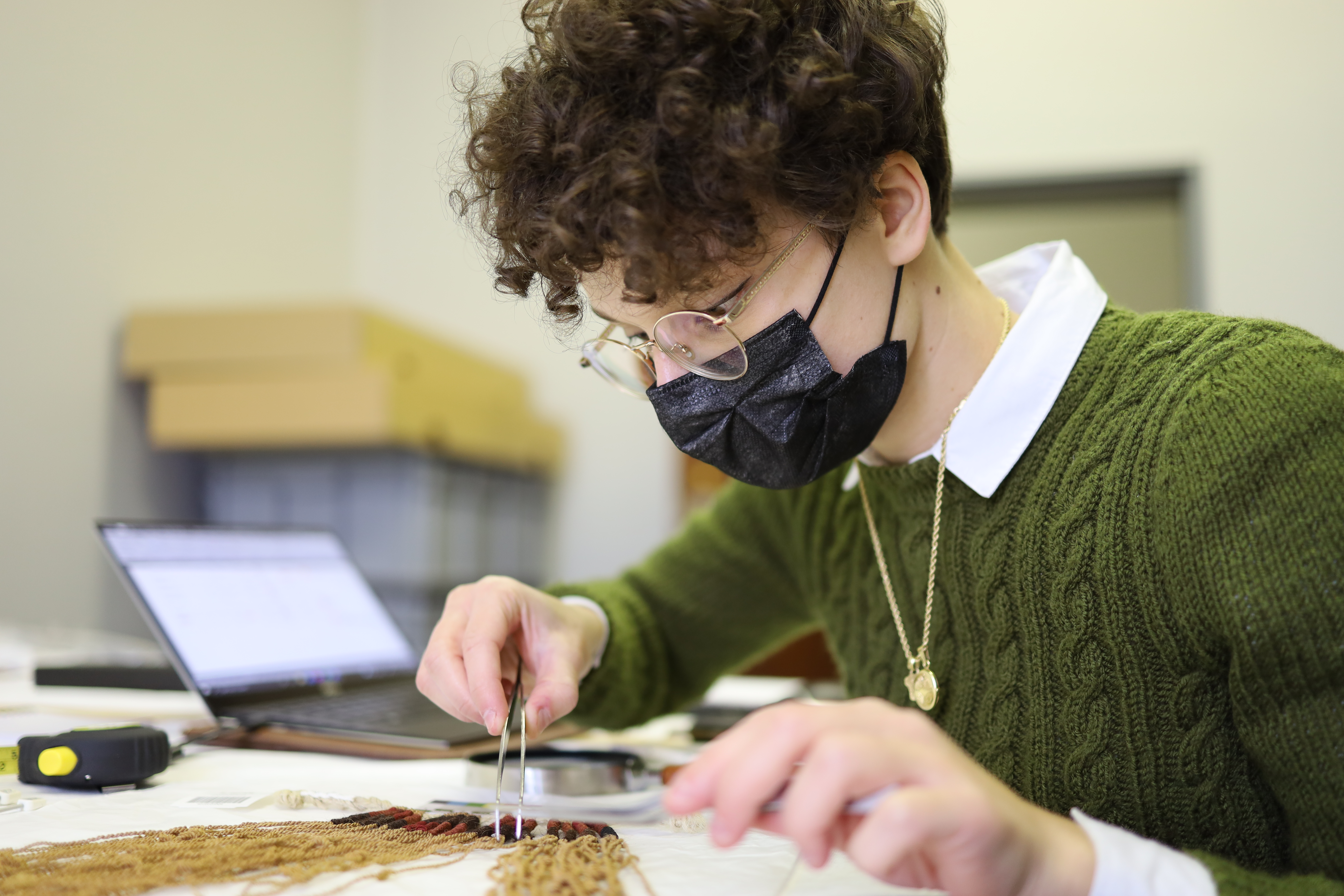
Lucrezia Milillo studying a khipu for her PhD and IPERION-HS project, November 2021 
Lucrezia Milillo studying a khipu in the deposits of the Ethnologisches Museum zu Berlin for her PhD and IPERION-HS project, February 2022 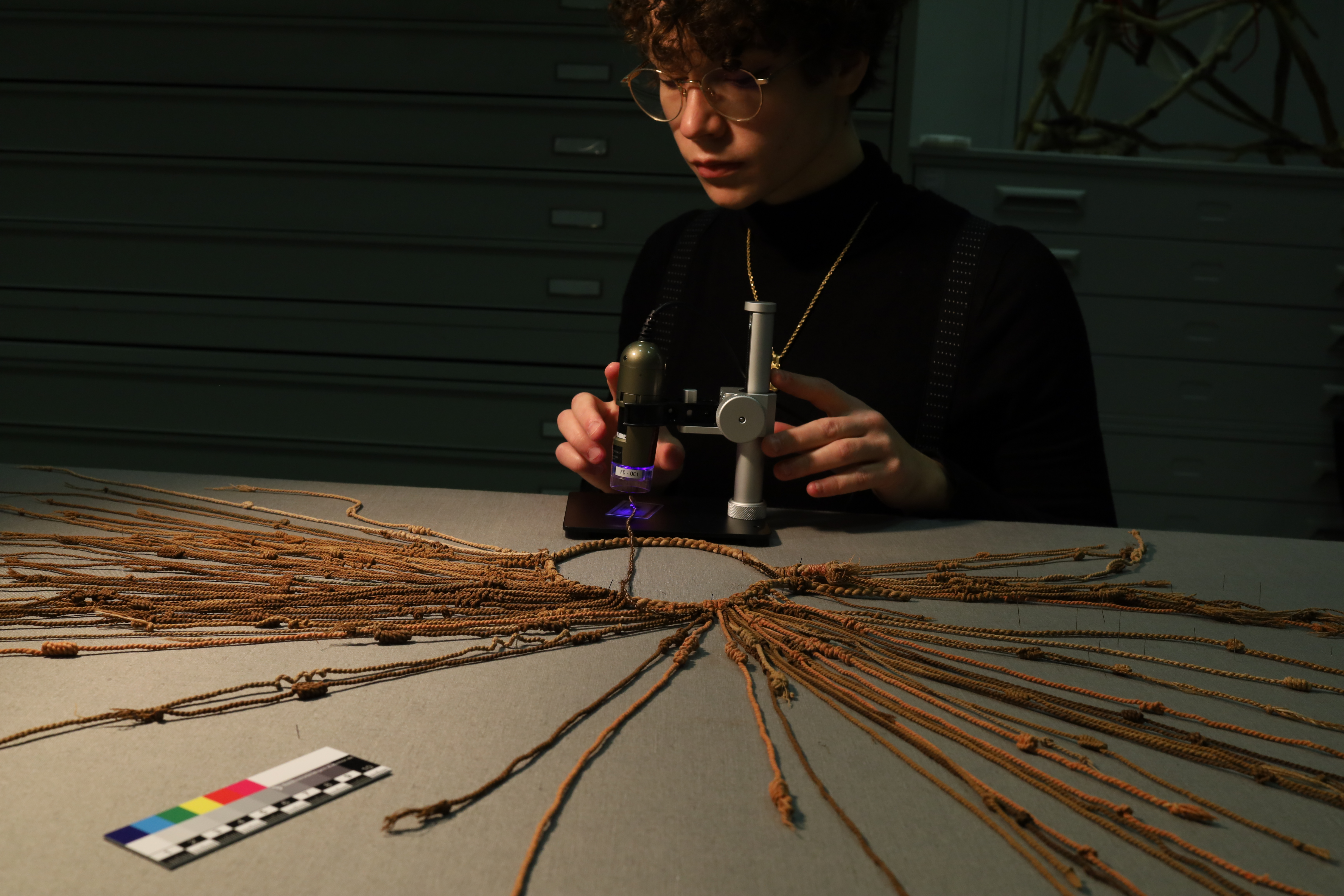
Lucrezia Milillo studying a khipu for her PhD and IPERION-HS project, December 2021 
Lucrezia Milillo studying a khipu in the deposits of the Ethnologisches Museum zu Berlin for her PhD and IPERION-HS project, February 2022 
Lucrezia Milillo studying the so called “quipolas” (or single-cord khipus) in the deposits of the Ethnologisches Museum zu Berlin for her PhD and IPERION-HS project, February 2022 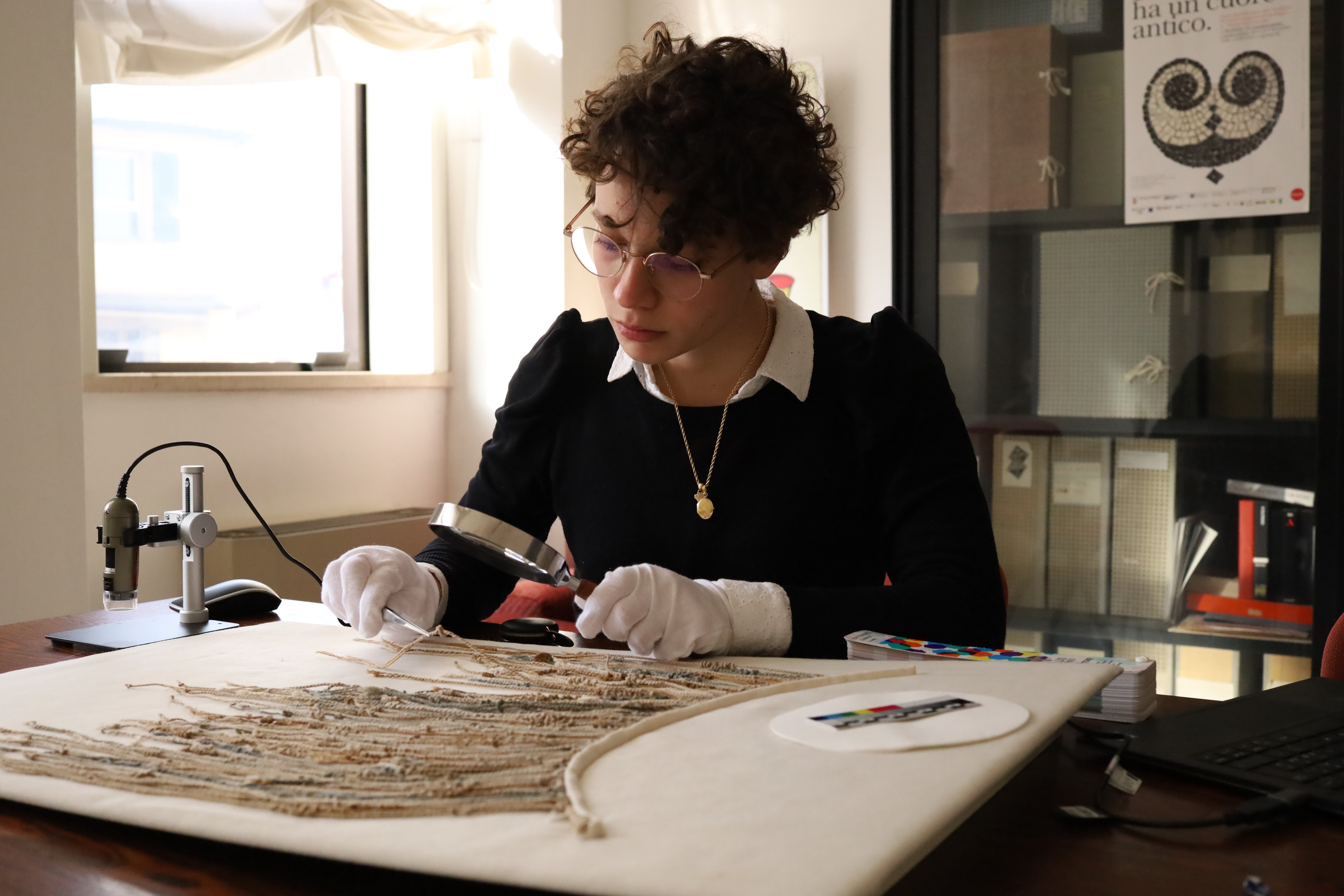
Lucrezia Milillo studying a khipu for her PhD and IPERION-HS project, April 2022
Lucrezia holds an undergraduate degree in Cultural Anthropology (2017) and a two-year master’s degree in History and Anthropology at the University of Bologna (cum laude, 2019). Here, she studied the collection, provenance and morphology of Andean khipus in Italian collections.


 Lucrezia Milillo